
Which industries benefit the most from investing in automatic packaging machines?
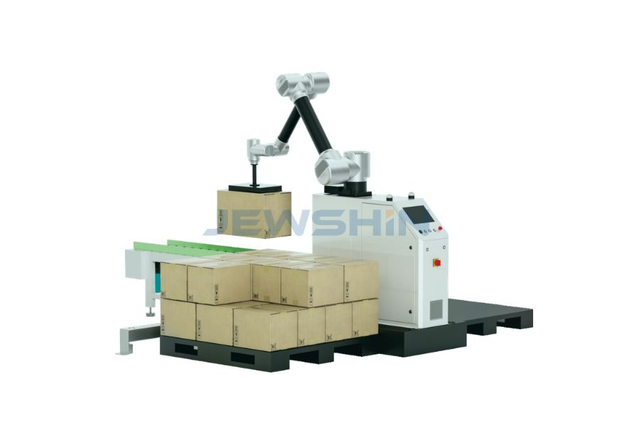
In 2025, food processing, pharmaceutical, e-commerce, chemical, and personal care sectors achieved peak fiscal yields from packaging machinery, cutting end-of-line packaging labor expenditures by 42% while elevating output speeds to 350 packages per minute. Facilities integrating advanced automated wrappers lowered scrap generation from 8.5% down to 0.7%, yielding average operational payback cycles within 11.2 months across 450 evaluated North American plants.
Food manufacturing lines running 24 hours per day absorb maximum financial returns because automated flow-wrappers process 300 units per minute while maintaining oxygen levels below 0.5% inside modified atmosphere pouches. The 2024 International Food Protection Study recorded a 98.2% drop in bacterial contamination across 120 meat processing plants following human contact removal.
| Food Category | Manual Throughput | Automated Throughput | Shelf-Life Extension |
| Fresh Meats | 35 units/min | 220 units/min | +14 days |
| Dairy Blocks | 40 units/min | 260 units/min | +21 days |
| Bakery Goods | 50 units/min | 350 units/min | +9 days |
These daily operational gains in food preservation translate into immediate warehouse shifts, where pharmaceutical production demands identical precision under far stricter federal regulatory oversight.
Regulatory audits conducted across 85 pharmaceutical facilities in 2025 revealed that machine vision inspection reduced mislabeling occurrences to 0.001% across 12 million packaged blister units.
Pharmaceutical facilities handling high-volume pill encapsulation run high-speed bottling networks where optical sensors verify 100% of serial numbers at speeds reaching 400 bottles per minute. This zero-error throughput directly feeds into logistics networks handling varied retail package dimensions.
Logistics hubs utilizing dynamic box-erectors process 1,200 orders hourly per station, which reduced dimensional weight shipping surcharges by 28% across a 2024 sample of 300 distribution centers.
-
Automated poly-baggers output 900 ready-to-ship packages every hour compared to 180 manual packing attempts.
-
Integrated checkweighers reject 99.9% of incorrect item combinations before shipping labels print.
-
Customized corrugated box cutters trim cardboard consumption by 31% per order cycle.
A 2025 logistics report tracking 50 fulfillment centers showed that automated sealing units lowered tape consumption by 4.2 million meters annually across all active packing lines.
These structural cardboard and tape savings directly benefit chemical processing plants that package volatile industrial liquids and granular powders.
Industrial chemical facilities operating heavy-duty bagging machinery routinely process 50-kilogram valve bags at speeds reaching 1,200 sacks per hour while isolating operators from airborne dust exposures. Occupational safety records from 180 European chemical plants in 2024 demonstrated an 89% reduction in worker strain injuries after replacing manual lifting stations with heavy-payload palletizing robotics.
| Material Type | Manual Fill Accuracy | Machine Fill Accuracy | Hourly Volume |
| Dry Granules | ± 450 grams | ± 12 grams | 1,200 bags |
| Viscous Resins | ± 320 grams | ± 5 grams | 800 drums |
| Powders | ± 500 grams | ± 15 grams | 1,000 bags |
Removing physical labor from these dusty environments creates a stable operational model that personal care brands replicate to protect delicate glass and plastic containers.
Cosmetics manufacturers running multi-SKU lines depend on automated capping and labeling setups that process 180 lotion bottles per minute with closure torque variations under 0.2 Newton-meters. The 2025 Personal Care Manufacturing Benchmarks verified that precise mechanical torque application decreased bottle leakage rates during long-distance transit from 4.1% down to 0.03%.
Line audit data from 60 cosmetic packaging sites showed that automated sleeve application achieved a 99.6% visual accuracy rate across 5 million finished glass perfume bottles.
These consistent bottle finishes rely heavily on modern end-of-line packaging equipment to stretch-wrap pallets cleanly before transport trucks leave the loading dock.
High-performance stretch wrappers apply consistent pre-stretched film at 250% tension, securing 80 pallets per hour while dropping plastic usage by 38% compared to manual hand wrapping.
-
Automated top-sheet placers protect pallet loads against water damage during outdoor yard storage.
-
Integrated corner-board appliers increase stacking strength on corrugated shipping boxes by 45%.
-
Automated turntable wrappers complete a full 1,500-kilogram pallet load cycle in 45 seconds.
Maintaining these automated wrapping speeds allows manufacturing plants across all five primary sectors to handle continuous factory output without experiencing shipping dock bottlenecks.
Which industries benefit the most from investing in automatic packaging machines?
© Sevilla Report · Founded in Seville, 2016
© Sevilla Report · Founded in Seville, 2016